How Often to Get a Haircut So Your Hairstyle Holds Its Shape
A hairstyle looks best on the first day after a haircut — that’s normal. The question worth asking is rather: how long does it look good before it starts to “lose” its shape? The answer depends mainly on the type of haircut, but also on the rate of regrowth, which is individual.
Short Haircuts with a Fade (fade, undercut)
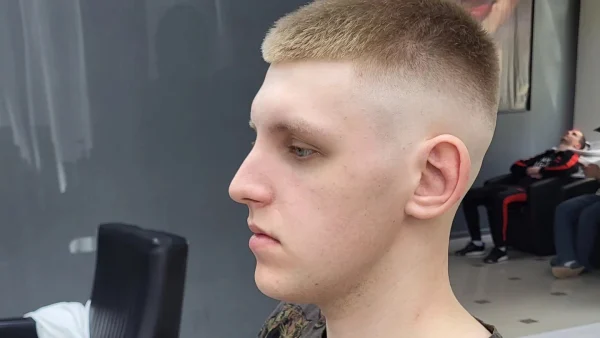
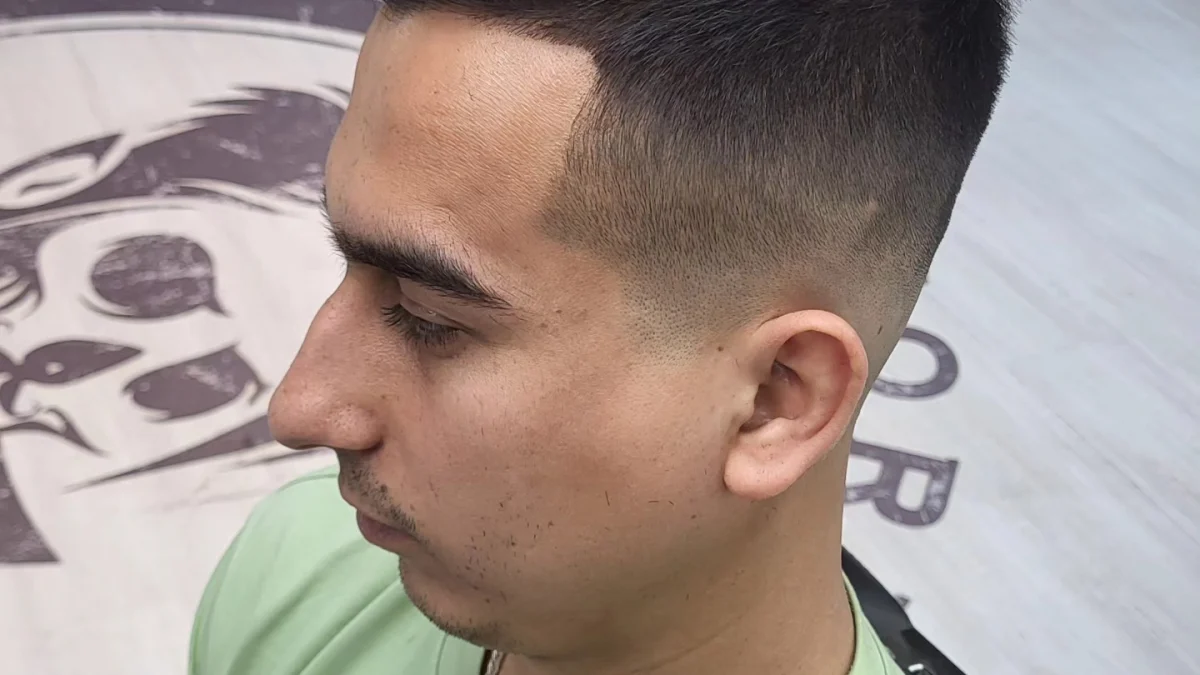
Haircuts with a distinct fade between lengths lose their effect the fastest — regrowth is most visible here, because the fade line starts to “blur”. For this type of hairstyle, a rhythm of every 2–3 weeks works well if you want the fade to always stay sharp. With higher fades (high fade), the effect tends to “fade away” faster than with lower ones (low fade), because the short-cut area is larger and regrows enough to become visible sooner.
Haircuts with a More Uniform Length
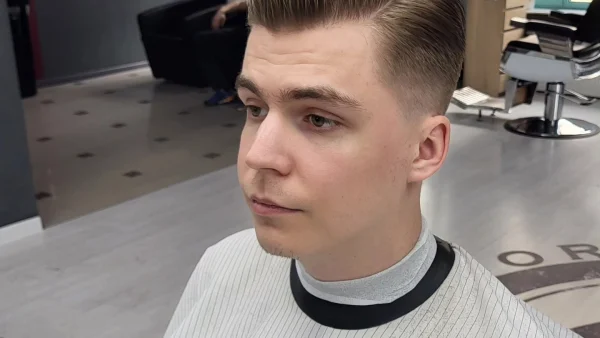
Hairstyles without a sharp fade — for example, a classic scissor cut with a similar length all over the head — grow out more “evenly”, so they keep their shape longer. Here, a visit every 4–6 weeks is often enough, though the final rhythm depends on how fast your hair grows. People with a faster hair growth rate may need visits closer to the lower end of this range, while others can comfortably go longer without losing a neat look.
The Beard Grows at Its Own Pace
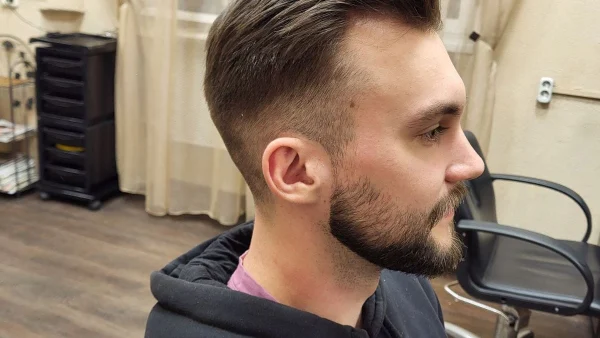
If you combine a haircut with a beard trim, it’s worth remembering that the two don’t necessarily “drift apart” at the same pace — the beard often needs touching up more often than the hairstyle itself. In the haircut + beard package you can sync both services in one visit, but if your beard grows faster, there’s nothing stopping you from dropping in for just a beard touch-up between full visits.
The hairstyle clients put off the longest is the fade — and that’s exactly the one that loses its shape the fastest. With a skin fade or a high fade, the line starts to blur after just 10–14 days. After three weeks, it’s no longer a touch-up — it’s rebuilding the entire cut, which takes more time and costs more.
Realistic intervals that work well for my clients: fade and short sides — every 2–3 weeks, a classic short cut — every 3–4 weeks, medium length — every 6–8 weeks, longer or growing-out hair — every 8–12 weeks, but still with a shape touch-up. Hair grows about 1.25 cm a month, so with a short cut it’s really noticeable.
Signs It’s Time for a Haircut
Instead of sticking to a rigid schedule, it’s worth watching for a few signals: the fade stops being sharp, the top starts to “weigh down” and lose its structure, and morning styling takes longer than usual. That’s a sign the hairstyle is nearing the end of its cycle, and it’s worth booking your next visit before the effect drops too low.
What Affects the Rate of Regrowth
The rate at which hair grows is largely an individual matter — it depends on genetic factors, age, and overall physical condition. That’s why two people with the same haircut may need visits on completely different schedules — one comes back every three weeks, another can comfortably go six. Instead of comparing yourself to others or to rigid recommendations, it’s best to observe your own hair and adjust your visit frequency to how your hairstyle actually behaves over time.
Haircuts and the Season
Sometimes it’s worth adjusting your visit schedule to the season too. In summer, many people choose shorter haircuts — it’s easier to cope with the heat, and more frequent contact with water (pool, sea) puts less strain on longer, more demanding hairstyles. In winter, on the other hand, hats and drier air can make hair static and harder to style, which can be an extra argument for a simpler, less demanding haircut in the colder months. This is, of course, a matter of individual preference, but it’s worth keeping in mind that the “ideal” hairstyle for January doesn’t necessarily have to be the same as for July.
Frequently Asked Questions
Does more frequent cutting speed up hair growth?
No — the rate of hair growth depends on individual factors, not on how often you get a haircut. Regular visits do, however, keep the hairstyle’s shape.
What if I can’t come back every 2–3 weeks with a fade?
It’s worth choosing a lower fade (low fade) or a haircut with a more uniform length — both keep looking good longer with less frequent visits.
The Simplest Way: Ask During Your Visit
The ideal visit rhythm is something very individual — it depends on the rate of regrowth, hair type, and how much you care about keeping a sharp fade. The simplest thing is to ask about it during your haircut — that makes it easy to match the timing of your next visit to your actual needs. You’ll find the full haircut price list on the Services and Price List page, and you can book a visit online via Booksy or by phone.
It’s also worth remembering that your visit rhythm can change over time — what worked a year ago doesn’t necessarily still work now if your type of haircut or rate of regrowth has changed. Regularly observing your own hair is more effective here than sticking to one rule set long ago.