Everyday beard care — habits that make a difference
A good-looking beard isn’t just the result of regular visits to the barber — it’s also the everyday habits that keep it in good condition between one trim and the next. Neglected care shows quickly: the beard tangles, the skin underneath itches, and the hairs themselves become coarse and hard to style. Below are a few basic rules worth making permanent habits.
Washing your beard — not the same as washing your hair
A beard grows on different skin than the hair on your head and has different needs. Regular hair shampoo can be too harsh for it — it can dry out both the hair and the skin underneath, leading to itching and beard dandruff (so-called beardruff). A good solution is a dedicated beard shampoo, used 2–3 times a week — washing more often with regular shampoo can have the opposite effect of what’s intended. Between washes, it’s enough to rinse the beard with water to get rid of dust and food residue, without lathering up again.
Hydration: beard oil and balm
The longer the beard, the more important hydration becomes — both for the hair itself and the skin underneath. Beard oil applied after washing (to slightly damp, not wet, hair) softens the beard and makes it easier to comb, while also reducing itching in the first weeks of growing it out. Balm is additionally useful when styling a longer beard, because it lightly stiffens it and helps hold its shape throughout the day. A few drops of oil spread between the palms and massaged in from the skin to the tips is a habit that takes less than a minute but makes a real difference in how the beard looks and feels to the touch.
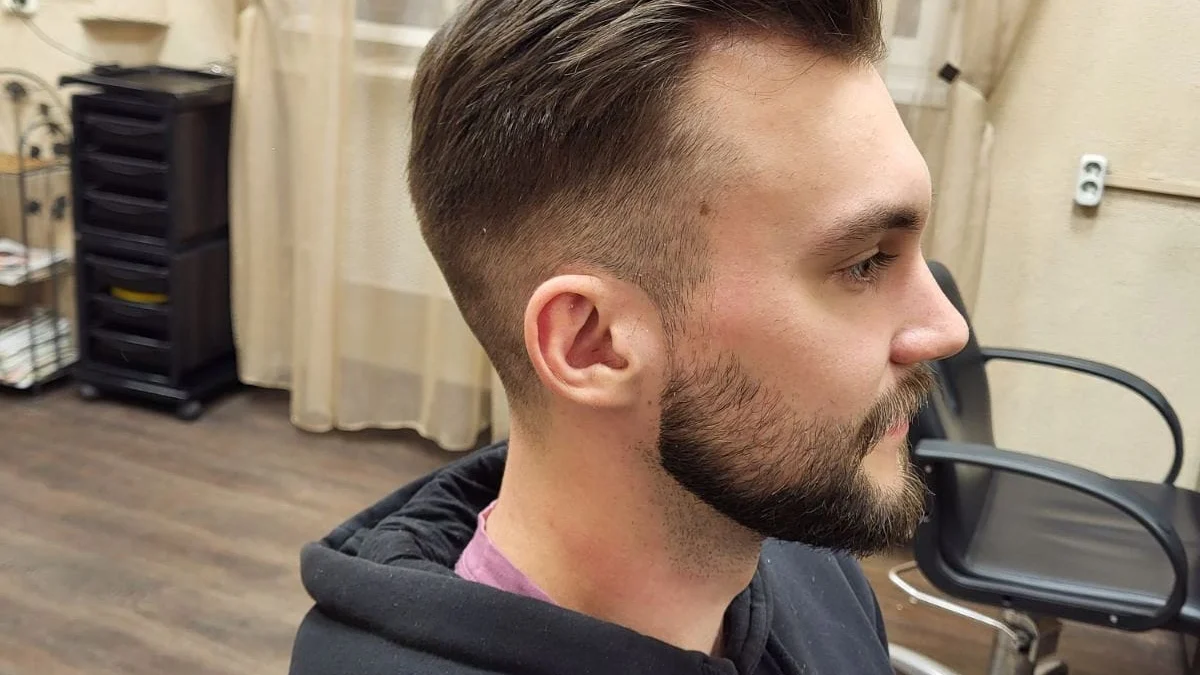
Mistake number one, which I correct practically every week: the neckline shaved too high. Guys shave up to the jawline because it seems “cleaner” that way, but the effect is the opposite — the beard looks smaller and the jaw looks weaker. The correct line runs in a soft arc from ear to ear, roughly two fingers above the Adam’s apple — not at the jawline.
Second mistake: trimming a wet beard. Wet hair is longer and lies differently, so once it dries, it turns out that much more came off than planned. Trim on a clean, dry, combed beard.
For sparse growth, I most often advise patience: give the beard 4–6 weeks without intervention before you assess the shape. Longer hairs overlap each other and cover the sparser spots on their own. If after that time you can see where the growth is strong and where it isn’t — we work with what’s there: we choose a shape that fits the strong areas instead of forcing a full beard. Clearly defined lines make a sparser beard look intentional rather than neglected.
Everyday combing
Combing daily with a wide-toothed comb (ideally wooden, so it doesn’t create static in the hair) helps lay the beard in the direction of growth and prevents tangling, especially with a longer beard. It’s worth doing this after applying oil — it’s then easier to comb through even trickier areas, e.g. under the chin and near the neck. For a shorter beard, a soft-bristle brush is enough, which also helps distribute natural sebum along the full length.
The most common beard care mistakes
A few habits that seem neutral at first glance can worsen the look of a beard over time. Washing with regular hair shampoo every day dries out the skin and leads to irritation. A complete lack of hydration makes the hair coarse and harder to style. Trimming the ends infrequently — even if you’re growing your beard out — lets split, uneven hairs grow, which spoil the overall effect. It’s also worth avoiding overly aggressive dry brushing, which can cause micro-damage to the hair.
When growing out ends and neglect begins
Even with good care, a beard needs regular contour and length correction — otherwise it loses its shape, and the line on the neck and cheeks starts to look untidy, no matter how hydrated it is. This is a good moment to book a correction, shaping, or the premium service — depending on how precise a contour you need. Home care alone will never fully replace regular visits — the two are complementary, not alternatives.
Diet, hydration, and overall condition
External care isn’t everything — the condition of facial hair is also affected by what happens “from within.” Adequate hydration and a balanced diet translate into hair quality, just as they do for the hair on your head. If your beard looks dull and dry despite regular oiling, it’s worth looking at these more general habits too, not just the cosmetics applied directly to the beard. Stress and lack of sleep can also affect the condition of your facial hair, although the effect tends to be less immediate and harder to notice than with external care.
Frequently asked questions
Does a beard need a separate balm and oil, or is one product enough?
Oil and balm serve different functions — oil hydrates and softens, while balm also styles and lightly stiffens. For a shorter beard, oil alone is usually enough; for a longer one, it’s worth using both.
How long does a beard need to grow before it can be meaningfully shaped?
It’s very individual, but usually you need at least 3–4 weeks of uninterrupted growth to have enough to work with for shaping a specific contour.
If you’re not sure how often to come back for a correction given your regrowth rate, the simplest thing is to ask during your visit — Julia will advise a rhythm suited to your beard. You can book a visit online via Booksy or by phone.