Fade, Undercut, or Classic Haircut? Types of Men’s Haircuts
“I want something like in the photo” is a good way to start a conversation with your barber, but it’s also worth knowing the basic terms, so it’s easier to communicate and know what to expect. Below is a short guide to the haircuts our clients choose most often.
Fade — a smooth transition
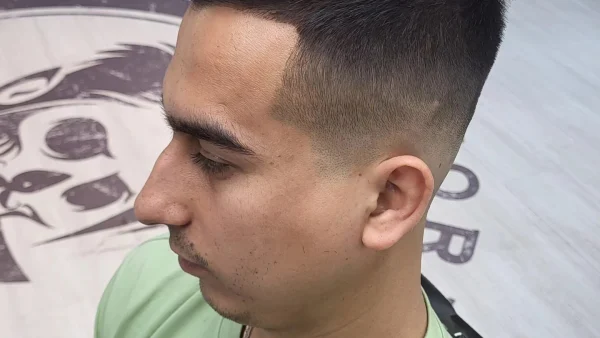
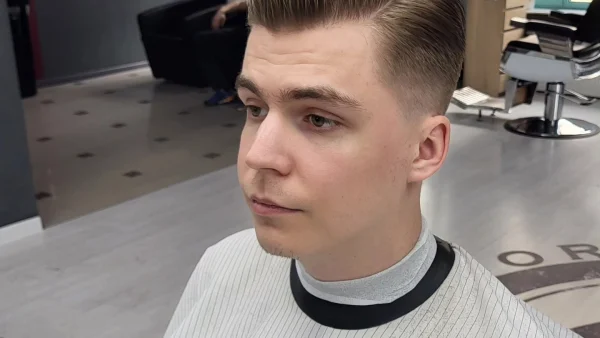
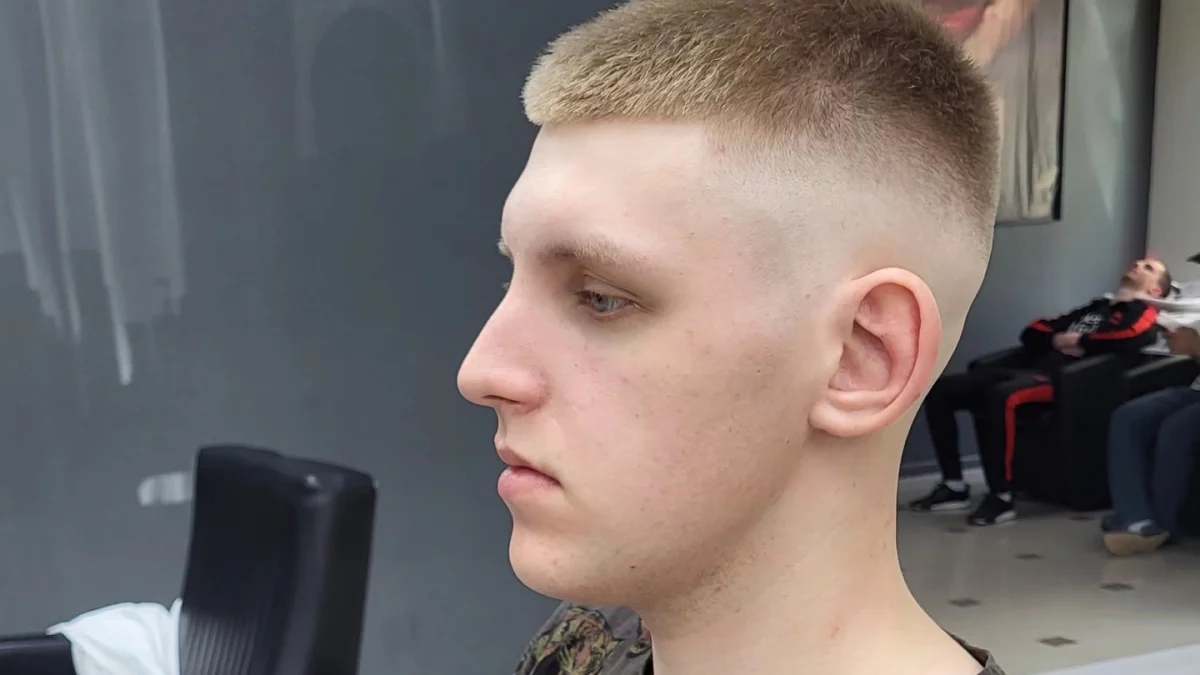
A fade is a haircut with a smooth, gradual transition in hair length — from very short or shaved down to the skin at the temples and nape, to longer hair on top. Depending on how low the transition starts, it’s called a low, mid, or high fade. It’s one of the most versatile haircuts — it works well with both short and longer hair on top, and suits most face shapes. The higher the transition, the more striking and bold the effect; a low fade is a safer, more understated choice, good for example for work in a more formal environment.
Undercut — a clear contrast
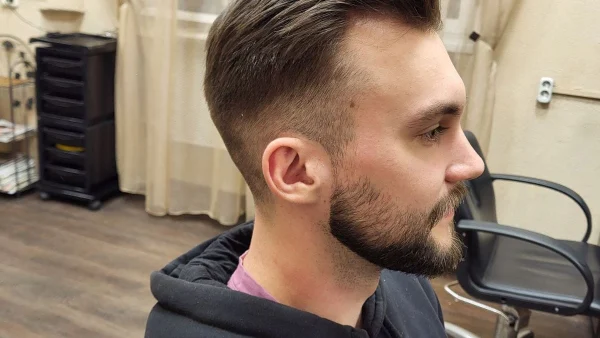
The undercut differs from the fade in that the transition is sharp rather than gradual — the sides and back are cut short or shaved, while the top stays noticeably longer, often long enough to comb back or style in a specific way (for example, swept back, to the side, or with a part). It’s a haircut with a stronger, more contrasting character than the fade — it works well if you like having more hair to style in the morning and don’t mind a clear line between lengths.
Classic scissor haircut
Not every haircut has to rely on clippers. A classic scissor haircut gives more natural, soft transitions and greater control over hair texture — it works well for hairstyles meant to look neat but without a sharp, distinct division in length. It’s also the only way to precisely refine a fringe or a top with uneven density. A scissor haircut also usually keeps its good look longer, since there’s no sharp line that quickly “grows out.”
How to choose a haircut for your face shape and hair type
Fade and undercut work well with thicker hair that holds its shape on a longer top. With finer, thinner hair, a shorter, more uniform length sometimes looks better — it makes the difference in density less noticeable. Face shape matters too: higher transitions visually lengthen the face, while a longer, textured top balances wider features well. These are general guidelines, though — it’s best to assess it during an in-person consultation.
Care between visits for different haircuts
The type of haircut also affects how much work it needs day to day. Fade and undercut, which usually have a longer top, often need morning styling — blow-drying with product or shaping it with paste or wax to get the intended effect. A classic scissor haircut, with a more uniform length, usually needs less effort in the morning — drying it and lightly adjusting it with your fingers is enough. It’s worth keeping this in mind when choosing, especially if you don’t have time for an elaborate routine every morning.
Timelessness versus trends
Fade and undercut tend to feel more “of the moment,” but that doesn’t mean they quickly go out of style — both forms of haircut have been present in barbering for decades and regularly come back in slightly changed variants. The classic scissor haircut, on the other hand, is timeless by design — it isn’t subject to trends in the same way, because it doesn’t rely on one clearly recognizable element like a sharp transition. If you want a hairstyle that will look good regardless of current trends, the classic is the safer choice — if you like change and follow new variants, fade and undercut give you more room to experiment.
Frequently asked questions
Can I change a low fade to a high fade at my next visit?
Yes, that’s one of the easier changes — just tell your barber about your new preferences at the start of the visit.
Which haircut requires the least styling in the morning?
Usually shorter, more uniform scissor haircuts — they don’t require precise styling the way a longer top with an undercut does.
Which haircut should you choose?
Your choice depends on a few things: face shape, hair density and structure, lifestyle (e.g., how much time you want to spend styling in the morning), and how often you’ll realistically come back for a haircut — fade and undercut require more frequent visits so the transition doesn’t “grow out.” You’ll find the full range of men’s haircuts, along with prices for each variant (from clipper cuts to scissor cuts), on the Services and Price List page. If you’re not sure what will work best for your hair type, the easiest thing is to discuss it during a consultation before the haircut. You can book a visit online via Booksy or by phone.